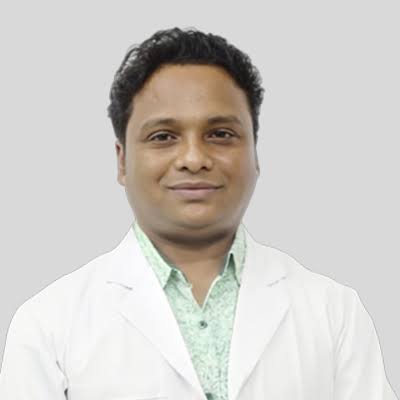
International-standard oncological resections with laparoscopic expertise, combining safe cancer clearance with faster recovery.
Colon cancer surgery aims to remove the tumour together with an adequate margin of healthy bowel and the surrounding lymph nodes, following internationally accepted oncological principles. Dr. Krishna Pada Saha performs these resections laparoscopically wherever possible, giving patients the same thorough cancer clearance as open surgery, but with smaller incisions, less blood loss, and a noticeably faster return to daily activity.
Successful colon cancer treatment depends on more than the operation itself — it depends on accurate pre-operative staging (CT scan, blood markers, and sometimes PET-CT), a technically sound oncological resection with adequate margins and lymph node clearance, and coordinated follow-up care afterward. Dr. Saha works closely with oncology and pathology colleagues at every stage, so that surgery, and any chemotherapy that follows, are planned as one connected treatment journey rather than isolated steps — giving each patient the best chance of a cure.

Recognising these early can help you seek timely, effective treatment.
Every patient is different — Dr. Saha recommends the safest, least invasive option that will give lasting results.
A clear, step-by-step path from consultation to full recovery.
A detailed history and clinical examination to accurately assess your condition and rule out other anorectal issues.
Based on the severity and your overall health, Dr. Saha recommends the most appropriate — and least invasive — treatment path.
The procedure is performed under local, spinal or general anaesthesia as appropriate, most often on a day-care basis.
Laparoscopic resection typically means a hospital stay of 4–6 days, with a gradual return to normal diet and activity guided by the surgical team.
Thorough pre-operative work-up ensures the right treatment plan is chosen from the start.
Full oncological clearance achieved through minimally invasive technique wherever safe.
Close collaboration with oncology colleagues for any chemotherapy needed after surgery.
Structured post-treatment monitoring to catch any recurrence at the earliest, most treatable stage.
Yes — laparoscopic resection follows the same oncological principles as open surgery, with equivalent cancer clearance and the added benefit of a faster recovery.
This depends on the cancer stage found on final pathology; Dr. Saha coordinates with oncology colleagues for adjuvant treatment when needed.
Most colon cancer resections do not require a permanent stoma; a temporary one is occasionally used in specific situations to protect healing.
Most patients gradually resume a normal diet within a few days of surgery, guided by the surgical team's advice.
Staging typically involves a CT scan of the chest, abdomen and pelvis, blood tests, and sometimes further imaging, to assess the extent of disease before planning surgery.
Outlook varies significantly by stage at diagnosis, which is why early detection through screening colonoscopy is so valuable — Dr. Saha can discuss your individual prognosis after staging.
Share your symptoms with our team and get guidance on the right next step.
Book Appointment WhatsApp Us